-
admin wrote a new post 2 months, 1 week ago
NVIDIA AI Released Nemotron Speech ASR: A New Open Source Transcription Model Designed from the Ground Up for Low-Latency Use Cases like Voice Agents
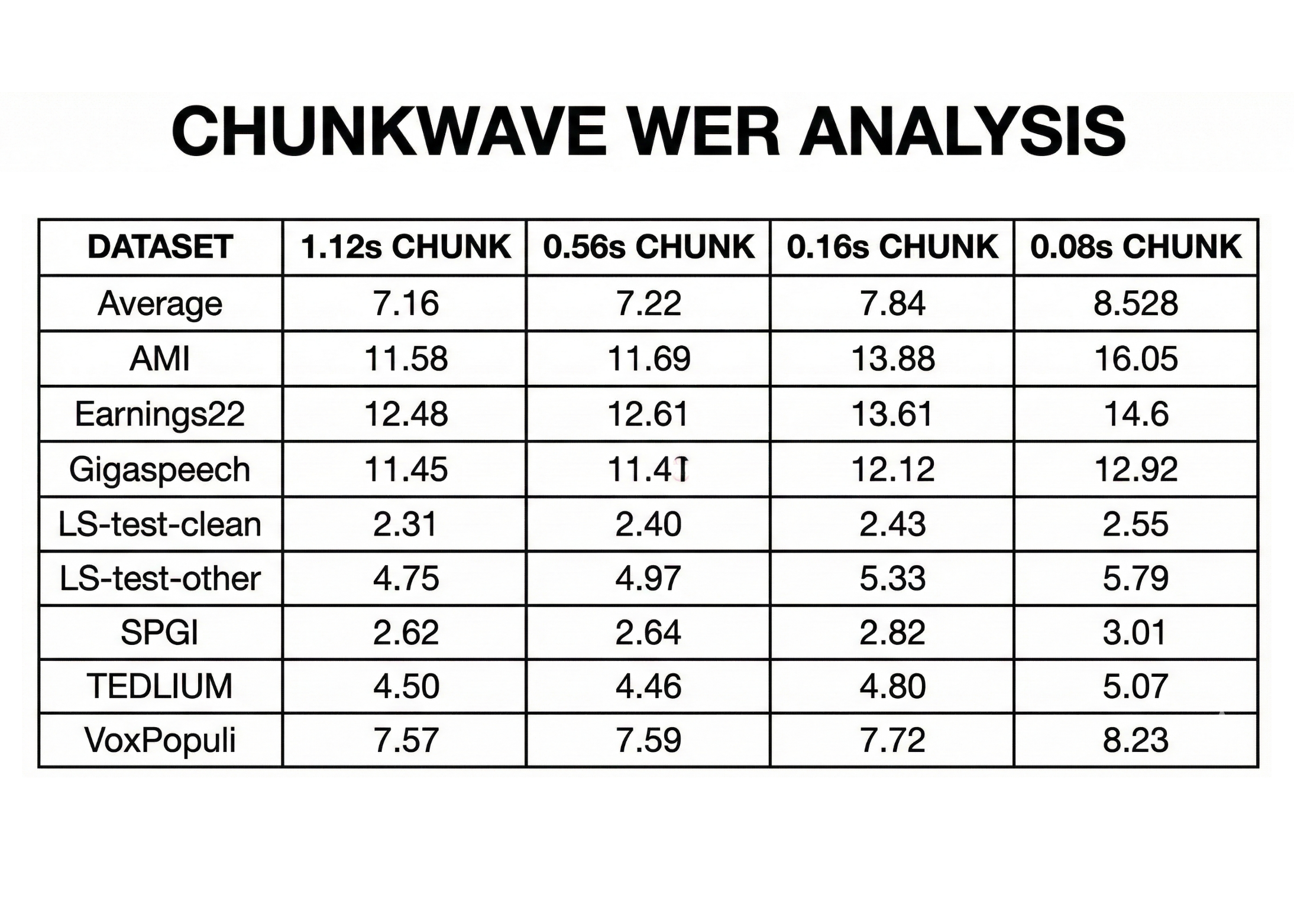 NVIDIA has just released its new streaming English transcription model (Nemotron Speech ASR) built specifically for low latency voice agents and live captioning. The checkpoint nvidia/nemotron-speech-streaming-en-0.6b on Hugging Face combines a cache aware FastConformer encoder with an RNNT decoder, and is tuned for both streaming and batch workloads on modern NVIDIA GPUs. Model design, architecture and input assumptions Nemotron Speech ASR (Automatic Speech Recognition) is a 600M parameter model based on a cache aware FastConformer encoder with 24 layers and an RNNT decoder. The encoder uses aggressive 8x convolutional downsampling to reduce the number of time steps, which directly lowers compute and memory costs for streaming workloads. The model consumes 16 kHz mono audio and requires at least 80 ms of input audio per chunk. Runtime latency is controlled through configurable context sizes. The model exposes 4 standard chunk configurations, corresponding to about 80 ms, 160 ms, 560 ms and 1.12 s of audio. These modes are driven by the att_context_size parameter, which sets left and right attention context in multiples of 80 ms frames, and can be changed at inference time without retraining. Cache aware streaming, not buffered sliding windows Traditional ‘streaming ASR’ often uses overlapping windows. Each incoming window reprocesses part of the previous audio to maintain context, which wastes compute and causes latency to drift upward as concurrency increases. Nemotron Speech ASR instead keeps a cache of encoder states for all self attention and convolution layers. Each new chunk is processed once, with the model reusing cached activations rather than recomputing overlapping context. This gives: Non overlapping frame processing, so work scales linearly with audio length Predictable memory growth, because cache size grows with sequence length rather than concurrency related duplication Stable latency under load, which is critical for turn taking and interruption in voice agents Accuracy vs latency: WER under streaming constraints Nemotron Speech ASR is evaluated on the Hugging Face OpenASR leaderboard datasets, including AMI, Earnings22, Gigaspeech and LibriSpeech. Accuracy is reported as word error rate (WER) for different chunk sizes. For an average across these benchmarks, the model achieves: About 7.84 percent WER at 0.16 s chunk size About 7.22 percent WER at 0.56 s chunk size About 7.16 percent WER at 1.12 s chunk size This illustrates the latency accuracy tradeoff. Larger chunks give more phonetic context and slightly lower WER, but even the 0.16 s mode keeps WER under 8 percent while remaining usable for real time agents. Developers can choose the operating point at inference time depending on application needs, for example 160 ms for aggressive voice agents, or 560 ms for transcription centric workflows. Throughput and concurrency on modern GPUs The cache aware design has measurable impact on concurrency. On an NVIDIA H100 GPU, Nemotron Speech ASR supports about 560 concurrent streams at a 320 ms chunk size, roughly 3x the concurrency of a baseline streaming system at the same latency target. RTX A5000 and DGX B200 benchmarks show similar throughput gains, with more than 5x concurrency on A5000 and up to 2x on B200 across typical latency settings. Equally important, latency remains stable as concurrency increases. In Modal’s tests with 127 concurrent WebSocket clients at 560 ms mode, the system maintained a median end to end delay around 182 ms without drift, which is essential for agents that must stay synchronized with live speech over multi minute sessions. Training data and ecosystem integration Nemotron Speech ASR is trained mainly on the English portion of NVIDIA’s Granary dataset along with a large mixture of public speech corpora, for a total of about 285k hours of audio. Datasets include YouTube Commons, YODAS2, Mosel, LibriLight, Fisher, Switchboard, WSJ, VCTK, VoxPopuli and multiple Mozilla Common Voice releases. Labels combine human and ASR generated transcripts. Key Takeaways Nemotron Speech ASR is a 0.6B parameter English streaming model that uses a cache aware FastConformer encoder with an RNNT decoder and operates on 16 kHz mono audio with at least 80 ms input chunks. The model exposes 4 inference time chunk configurations, about 80 ms, 160 ms, 560 ms and 1.12 s, which let engineers trade latency for accuracy without retraining while keeping WER around 7.2 percent to 7.8 percent on standard ASR benchmarks. Cache aware streaming removes overlapping window recomputation so each audio frame is encoded once, which yields about 3 times higher concurrent streams on H100, more than 5 times on RTX A5000 and up to 2 times on DGX B200 compared to a buffered streaming baseline at similar latency. In an end to end voice agent with Nemotron Speech ASR, Nemotron 3 Nano 30B and Magpie TTS, measured median time to final transcription is about 24 ms and server side voice to voice latency on RTX 5090 is around 500 ms, which makes ASR a small fraction of the total latency budget. Nemotron Speech ASR is released as a NeMo checkpoint under the NVIDIA Permissive Open Model License with open weights and training details, so teams can self host, fine tune and profile the full stack for low latency voice agents and speech applications. Check out the MODEL WEIGHTS here. Also, feel free to follow us on Twitter and don’t forget to join our 100k+ ML SubReddit and Subscribe to our Newsletter. Wait! are you on telegram? now you can join us on telegram as well. Check out our latest release of ai2025.dev, a 2025-focused analytics platform that turns model launches, benchmarks, and ecosystem activity into a structured dataset you can filter, compare, and export The post NVIDIA AI Released Nemotron Speech ASR: A New Open Source Transcription Model Designed from the Ground Up for Low-Latency Use Cases like Voice Agents appeared first on MarkTechPo […]
 -
admin wrote a new post 2 months, 1 week ago
LLMs contain a LOT of parameters. But what’s a parameter?
MIT Technology Review Explains: Let our writers untangle the complex, messy world of […]
-
admin wrote a new post 2 months, 1 week ago
The man who made India digital isn’t done yetNandan Nilekani can’t stop trying to push India into the future. He started nearly 30 years ago, m […]
-
admin wrote a new post 2 months, 1 week ago
81 Jobs that AI Cannot Replace in 2026I get the AI scare, and if I am being honest here, you should take it seriously too. The AI age is […]
-
admin wrote a new post 2 months, 1 week ago
Dummy Variable Trap in Machine Learning Explained SimplyIn machine learning with categorical data, it is common to encode the categories as dummy […]
-
admin wrote a new post 2 months, 1 week ago
-
admin wrote a new post 2 months, 1 week ago
Liquid AI Releases LFM2.5: A Compact AI Model Family For Real On Device Agents
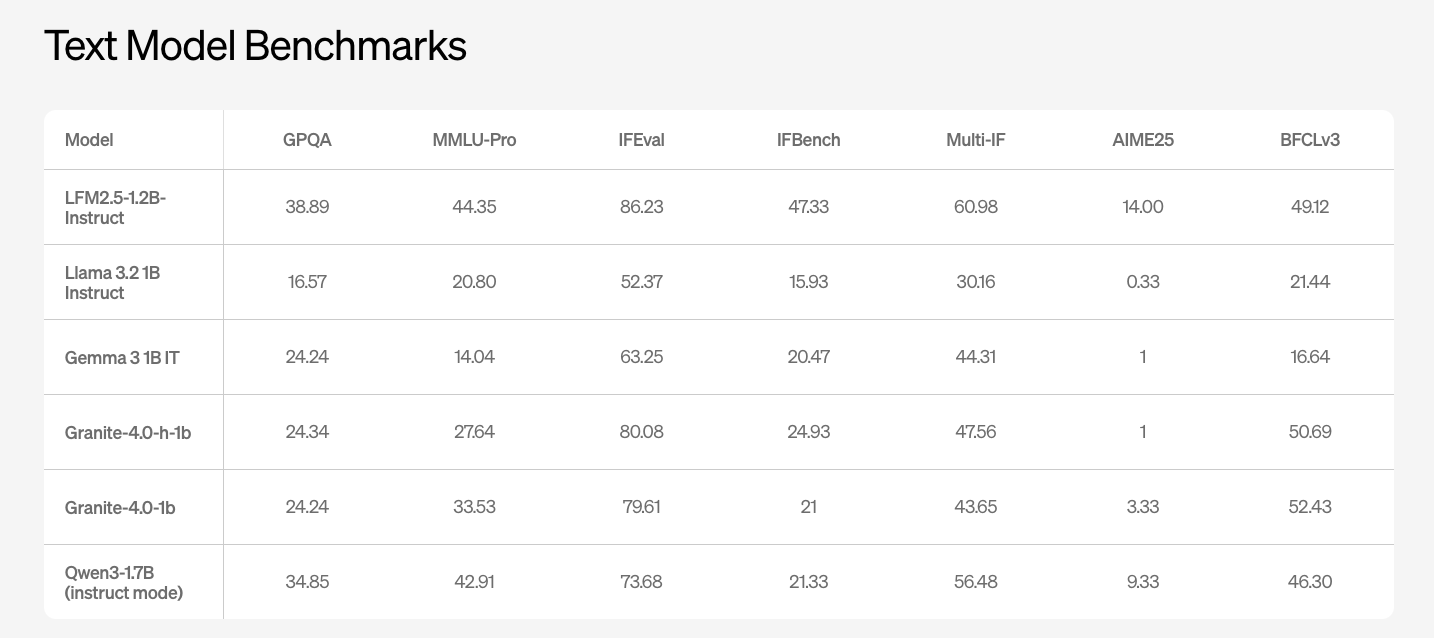 Liquid AI has introduced LFM2.5, a new generation of small […]
 -
admin wrote a new post 2 months, 1 week ago
How to Land Your First Brand Deal (And Keep ‘Em Coming)If you’re a creator looking for ways to monetize your following, partnering with brands is one of the best routes you can take. If you play…
-
admin wrote a new post 2 months, 1 week ago
Powering up (and saving) the planetWater shortages in Southern California made an indelible impression on Evelyn Wang ’00 when she was growing up i […]
-
admin wrote a new post 2 months, 1 week ago
StarstruckFew people, if any, contemplate stars—celestial or cinematic—the way Aomawa Shields does. An astronomer and astrobiologist, Shie […]
-
admin wrote a new post 2 months, 1 week ago
-
admin wrote a new post 2 months, 1 week ago
Europe’s drone-filled vision for the future of warLast spring, 3,000 British soldiers of the 4th Light Brigade, also known as the Black Rats, […]
-
admin wrote a new post 2 months, 1 week ago
Why AI predictions are so hardThis story originally appeared in The Algorithm, our weekly newsletter on AI. To get stories like this in your […]
-
admin wrote a new post 2 months, 1 week ago
30 Best Data Science Books to Read in 2026Data science powers decision-making across modern businesses, from data preparation and automation to […]
-
admin wrote a new post 2 months, 1 week ago
How to Use Gemini 3 Pro in CLI?AI-based coding agents are changing developer workflows. Proof – the arrival of Gemini 3 Pro in the Gemini CLI. It […]
-
admin wrote a new post 2 months, 1 week ago
Always-On Automations: Put Manychat to Work While You Sleep 😴If you’ve ever opened Instagram after a busy day and instantly felt a sense of dread, you’re not alone. Creators and marketers of all kinds are…
-
admin wrote a new post 2 months, 1 week ago
The overlooked driver of digital transformation
When business leaders talk about digital transformation, their focus often jumps straight to cloud […]
-
admin wrote a new post 2 months, 1 week ago
The Download: Kenya’s Great Carbon Valley, and the AI terms that were everywhere in 2025
 This is today’s edition of The Download, our weekday new […]
 -
admin wrote a new post 2 months, 1 week ago
The creator of Claude Code just revealed his workflow, and developers are losing their mindsWhen the creator of the world’s most advanced coding […]
-
admin wrote a new post 2 months, 1 week ago
A Coding Guide to Design and Orchestrate Advanced ReAct-Based Multi-Agent Workflows with AgentScope and OpenAIIn this tutorial, we build an […]
- Load More

admin
Last active: Active 3 months ago
Comments: 0
Likes: 0
Submitted: 1048
Friends: 0
User Rating: Be the first one!